
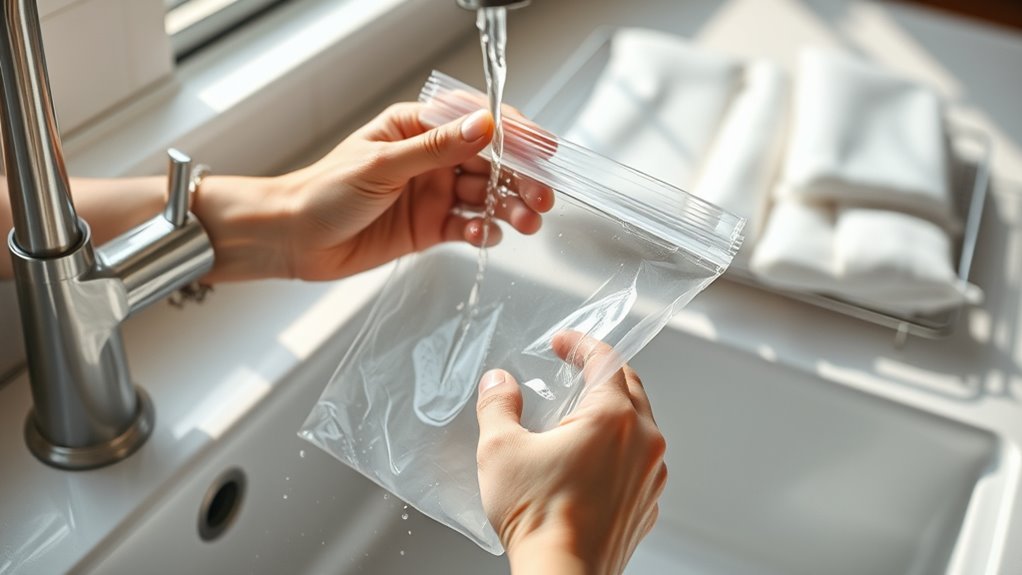
How You Can Reuse Vacuum Seal Bags Safely and Effectively
You can reuse vacuum seal bags safely by choosing durable, multi-layer bags with reinforced seams and textured surfaces. These features help ensure the bags hold up well after multiple uses.
Just remember to avoid reusing bags that previously held raw meat or dairy to prevent cross-contamination.
Always wash the bags thoroughly with warm, soapy water. Then, sanitize them in a bleach solution and let them dry completely before using again.
Before resealing, take a close look for any holes, weak seals, or lingering odors. It’s also a good idea to test for leaks to make sure your food stays fresh.
Proper cleaning and careful inspection guarantee safe reuse. Keep going to uncover tips on sealing and maintaining your bags effectively!
Key Takeaways
- Select durable, multi-layer vacuum seal bags with reinforced seams. Avoid those used for raw meat or dairy products.
- Clean bags thoroughly with warm, soapy water. Then, sanitize them in a bleach solution, rinse well, and dry completely before reuse.
- Inspect bags carefully for holes, tears, weak seals, odors, or mold before each reuse. This helps ensure safety.
- Test bag integrity by submerging it in water. This way, you can detect leaks and confirm a strong, intact seal after resealing.
- Store cleaned and dried bags in a dry, clean place. Replace them immediately if you notice any damage or contamination.
Which Vacuum Seal Bags Are Safe to Reuse and When to Replace Them
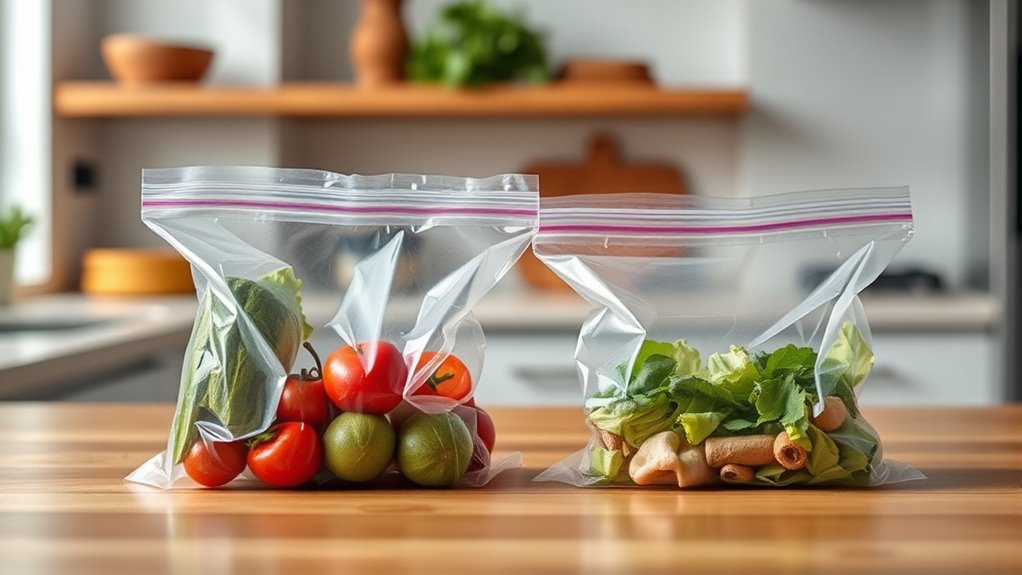
Although many vacuum seal bags are designed for single use, you can safely reuse certain types if you choose the right ones and clean them properly. Reusable vacuum seal bags are usually made from durable, multi-layer plastic with reinforced seams and a thickness of at least 5.5 mil, making them safe to reuse.
Bags with textured or ridged surfaces tend to be more durable and easier to clean, enhancing their reusability. Avoid reusing bags that previously held raw meat, fish, eggs, or cheese, as bacteria can linger despite proper cleaning.
When using your vacuum sealer for long-term storage, always inspect bags for signs of damage like holes, tears, weak seals, or persistent odors. These issues mean it’s time to replace the bags to keep your food safe and your vacuum sealer working well.
How to Clean, Inspect, and Seal Vacuum Seal Bags for Safe Reuse
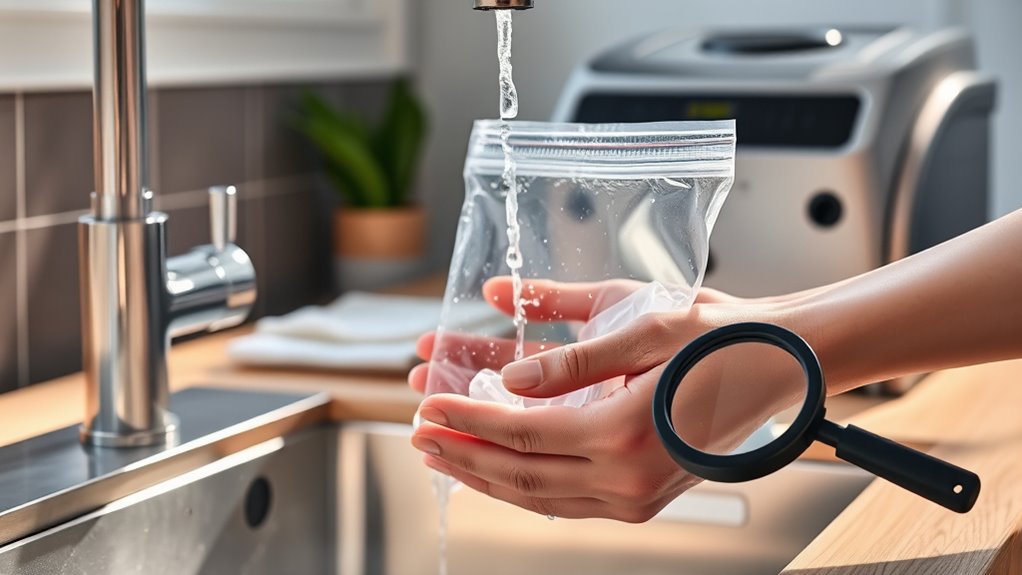
To safely reuse your vacuum seal bags, start by washing them thoroughly with warm water and mild soap. Use a soft brush or sponge to remove any food residue. Proper cleaning and sanitation are essential for food safety, especially if you stored raw meat or fish.
Follow these steps to clean, inspect, and reseal your reusable vacuum seal bags:
- Sanitize bags used for raw foods by soaking them in a bleach solution (1 tablespoon per gallon) for 5 minutes. Then, rinse them thoroughly.
- Inspect for leaks by submerging the bag in water. Watch for bubbles—that’s a sign of holes.
- Make sure the bag is completely dry before resealing. This helps prevent mold and bacterial growth.
- Reseal carefully using your vacuum sealer or staples. After that, check the seal’s integrity to keep your food fresh and safe.
Frequently Asked Questions
Is It Safe to Reuse Vacuum Seal Bags?
Yes, you can reuse vacuum seal bags if you clean them thoroughly and check for damage.
Just make sure to avoid reusing bags that held raw meat or fish. And always guarantee the seal stays intact to keep your food safe.
How to Avoid Botulism When Vacuum Sealing?
To avoid botulism, always cook foods thoroughly and store them cold. Using acidified items can also help keep things safe.
Don’t vacuum seal unrefrigerated foods. Make sure to sanitize bags and equipment, and inspect them regularly. This way, you’ll keep your sealed foods safe and fresh.
Are You Supposed to Throw Away Vacuum Bags?
You should usually throw away vacuum bags after one use to avoid leaks and bacteria.
Only reuse bags designed for multiple uses, and always check for damage or odors before deciding to keep them.
Can I Use Regular Ziploc Bags in a Vacuum Sealer?
No, you can’t use regular Ziploc bags in a vacuum sealer. They’re not designed for sealing under pressure, so they might melt or leak.
It’s best to use bags made specifically for vacuum sealing. That way, you can guarantee a proper seal and keep your food fresh longer.
Conclusion
You might’ve heard that reusing vacuum seal bags isn’t safe, but that’s not entirely true. If you choose bags designed for multiple uses, clean them thoroughly, and inspect for damage, you can reuse them without worry.
Just replace bags that have tears, stubborn stains, or have lost their sealing ability. By taking these simple steps, you’ll save money and reduce waste—proving that vacuum seal bags can be both safe and sustainable when handled right.
So, if you want to reuse vacuum seal bags safely and effectively, always pick durable bags made for repeated use. Clean them well after every use and check for any signs of wear. This way, you keep your food fresh, save cash, and help the environment by cutting down on plastic waste. Reusing vacuum seal bags properly is a smart, eco-friendly choice that benefits both your kitchen and the planet.



5 Comments