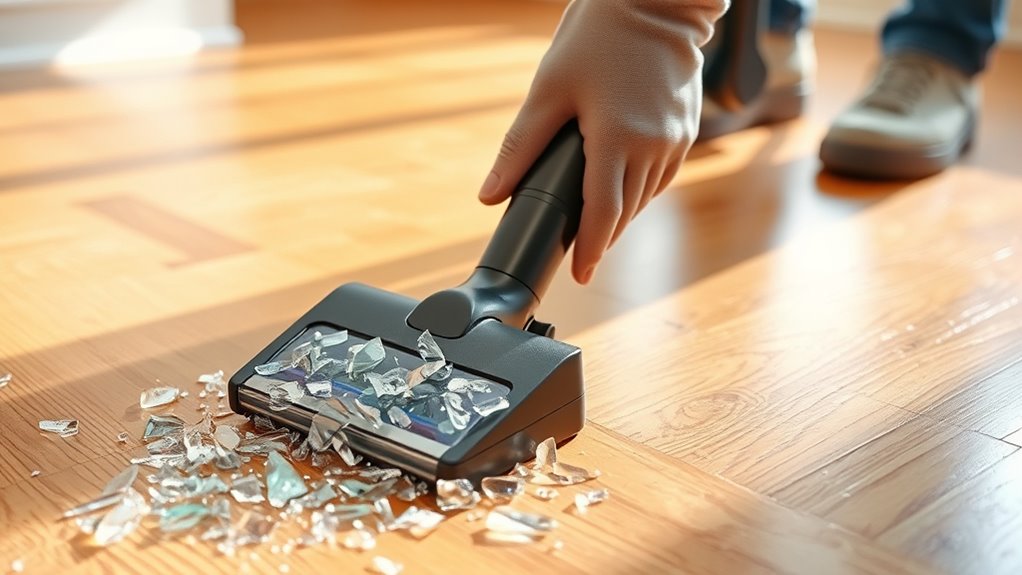
5 Safe Tips for Vacuuming Glass Without Damage
To vacuum glass safely, first remove large shards by hand while wearing gloves to prevent injury. Using the right vacuum is crucial—opt for a durable shop vacuum designed for sharp debris.
Avoid cordless or robot vacuums because they might get damaged or miss tiny fragments.
For those small glass pieces, don’t vacuum directly. Instead, use a damp paper towel or tape to pick them up gently.
Always block off the area and keep pets away to ensure everyone’s safety during cleanup.
After you finish, inspect and clean your vacuum thoroughly to avoid any damage.
If you want to handle glass cleanup with confidence, there’s more helpful advice you can apply. Taking these simple steps makes vacuuming glass safer and more effective every time.
Key Takeaways
- Avoid using standard household vacuums; opt for industrial shop vacuums with bypass motors designed for sharp debris. These are much better suited for picking up glass without getting damaged.
- Make sure to manually pick up the large glass shards first. This helps prevent clogging and damage before you vacuum the smaller fragments.
- Instead of vacuuming tiny glass particles directly, try using damp paper towels or tape to safely collect them. It’s a gentler way to get those hard-to-see pieces.
- After you’re done, thoroughly inspect and clean your vacuum hoses, filters, and canisters. Glass can easily get embedded, so it’s important to remove all the bits right away.
- Keep children and pets away during cleanup. Also, don’t forget to wear protective gloves to avoid injury from sharp glass pieces. Safety first!
Should You Vacuum Glass? Risks and Alternatives
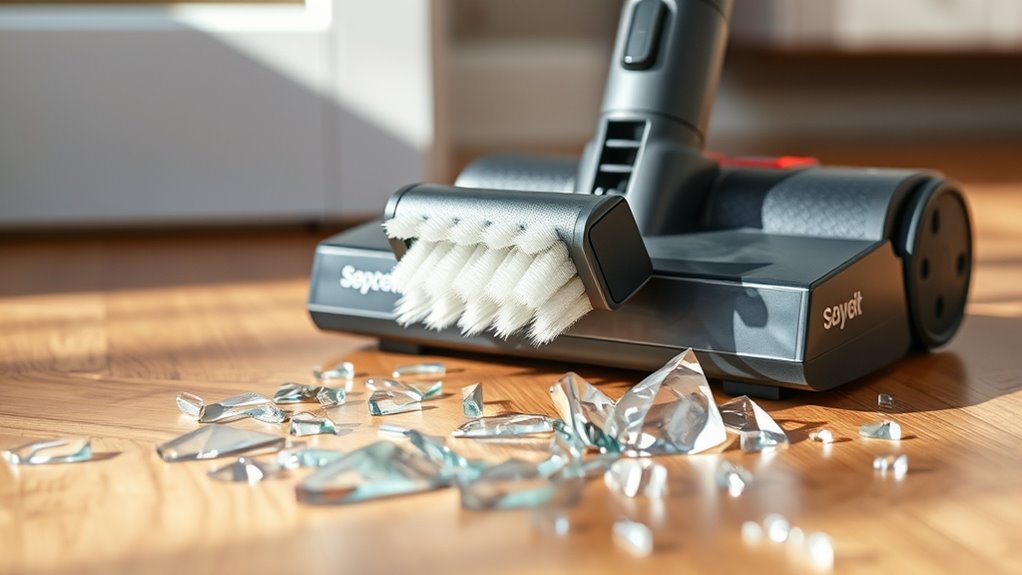
Although it might seem convenient, vacuuming glass can cause serious damage to your vacuum’s internal parts, like hoses and filters, especially when dealing with sharp shards. When you try to vacuum glass shards, you risk clogging filters and air pathways with tiny glass particles. This reduces suction and leads to costly vacuum damage.
Most vacuum warranties don’t cover damage caused by such hazardous debris, so vacuuming glass can void your warranty. Instead, manual removal is the safest option for large shards on hard floors. It helps prevent injuries and scratches.
If you must vacuum, choose alternative cleaning methods designed for glass cleanup. Avoid robot vacuums or wet/dry shop vacs not rated for this purpose. By handling glass carefully and avoiding vacuum glass, you protect your equipment and ensure safe glass cleanup without risking a damaging vacuum.
Prepare Your Space for Safe Glass Cleanup
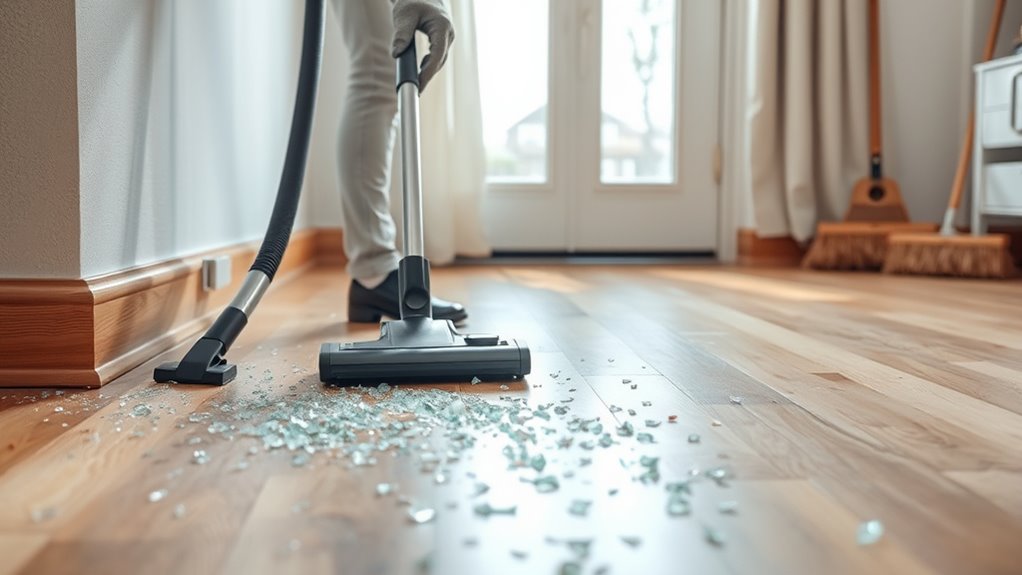
Before you start cleaning up broken glass, make sure to block off the area and keep children and pets away to prevent accidents. Begin your surface preparation by removing obstacles that could hide glass shards or cause trips.
Secure the area with clear boundaries so no one accidentally wanders in during cleanup. Put on protective gloves to shield your hands from large shards and other sharp fragments.
Use bright lighting or a flashlight to help identify shards, especially the smaller, reflective pieces that are easy to miss. Carefully remove large shards by hand, avoiding any quick movements that might spread glass further.
Once collected, place all broken glass into a sturdy disposal container, clearly labeling it to ensure safe handling later. Taking these safety precautions seriously will minimize injury risk and prepare your space effectively for the next steps in cleaning up glass without damage.
Choose the Best Vacuums and Tools for Glass
When you’re ready to vacuum up glass shards, choosing the right vacuum and tools is essential to avoid damage and guarantee safety. Not all vacuums handle sharp debris well, so picking an appropriate vacuum designed for glass cleanup is key.
Consider these tips for damage prevention and effective debris pickup: Use industrial shop vacuums with bypass motors and wide, rigid hoses to safely handle glass shards without harming your vacuum.
Use industrial shop vacuums with bypass motors and rigid hoses for safe, effective glass shard cleanup.
Also, opt for wet/dry floor cleaners that feature durable canisters, ideal for containing sharp glass pieces. Avoid cordless stick vacuums and robot vacuums; their delicate components and sensors can get damaged by glass debris.
Always attach vacuum attachments or floor heads designed specifically for debris pickup to minimize risk during glass cleanup. Selecting the right vacuum tools not only protects your equipment but guarantees safe, thorough removal of hazardous glass shards from your space.
Vacuum Small Glass Fragments Safely
After selecting the right vacuum and tools, you’ll want to handle small glass fragments with extra care to avoid spreading or damaging your equipment.
For tiny glass shards and micro-shards on hard floors, use a damp paper towel to gently lift them without scattering.
Around baseboards and tight corners, press tape—like duct or packing tape—onto surfaces to pick up micro-glass safely.
Avoid vacuuming micro-shards directly, as they can damage your vacuum and reduce vacuum safety.
Instead, manually remove larger pieces first using these methods.
Always inspect your shoes after walking through glass-shattered areas to prevent tracking micro-glass onto fragile surfaces elsewhere.
This careful approach guarantees damage prevention while keeping your environment safe.
Only resume full vacuuming once all visible and micro-shards are thoroughly removed, maintaining both your vacuum’s integrity and your personal safety during cleanup.
Inspect and Maintain Your Vacuum After Cleanup
Though cleaning up glass shards might seem complete once the visible pieces are gone, you should inspect your vacuum thoroughly to prevent hidden damage. Proper vacuum maintenance is essential to keep your device functioning and avoid costly repairs caused by internal shards.
After cleaning, perform a detailed vacuum inspection to catch any glass fragments lodged inside.
Make sure to:
- Check hoses and brushes carefully for embedded shards that could cause scratches or blockages.
- Inspect internal components using a flashlight, removing any debris stuck inside.
- Clean filters thoroughly, rinsing washable ones and allowing them to dry fully to support filter care and prevent mold.
- Empty the canister or dustbin outside immediately to avoid shards scattering or puncturing vacuum bags.
Frequently Asked Questions
Will Vacuuming up Glass Ruin My Vacuum?
Yes, vacuuming glass can ruin your vacuum by damaging hoses, filters, or the motor.
You shouldn’t use regular vacuums for glass. Instead, use specialized wet/dry vacuums designed to handle sharp debris safely.
How to Safely Vacuum Glass?
You can safely vacuum glass by using a shop vac with a wide hose, since 70% of vacuums get damaged by shards.
Always remove large pieces first and vacuum slowly to avoid punctures or clogs. It’s better to take your time with this to keep your vacuum in good shape.
Is It Better to Vacuum or Sweep Glass?
You’re better off sweeping glass first to avoid damaging your vacuum. Vacuuming small fragments only after careful sweeping helps protect your equipment and guarantees safer cleanup.
It also prevents clogging or spreading tiny shards into the air. So, start with a broom and then finish up with the vacuum. This way, you keep things safe and clean without any hassle.
Does Vinegar Damage Glass?
You might think vinegar would harm glass, but it won’t—if you use it right. Diluted vinegar cleans without damage, but avoid strong or prolonged contact.
Rinse well to keep your glass sparkling and safe! Easy, right? Just a little care goes a long way.
Conclusion
Vacuuming glass might seem risky, but with the right steps, you can do it safely. By preparing your space, choosing the best tools, and handling small fragments carefully, you protect both your floors and your vacuum.
Don’t forget to inspect your vacuum afterward to keep it in top shape. This helps avoid any clogs or damage that glass pieces might cause.
So, why let fear stop you from a quick, clean solution when you can vacuum glass without damage? With proper precautions and the right vacuuming techniques, cleaning up glass safely is easier than you think. Keep these tips in mind, and you’ll protect your vacuum and floors while getting the job done efficiently.