
Should You Vacuum or Dust First?
You should dust before you vacuum to remove loose debris and prevent dust from settling back onto your floors during cleaning.
Dusting first traps airborne particles and improves air quality while reducing the need for repeated vacuuming.
After dusting, wait about 15 minutes to let dust settle, then vacuum using a HEPA filter for best results.
This approach saves time and keeps your home consistently cleaner.
Keep exploring to find the ideal timing and technique for vacuuming after dustinghttps://www.thevacuumadvisor.com/is-it-better-to-dust-or-vacuum-first/.
Trust me, getting the order right makes a big difference in your cleaning routine!
Key Takeaways
- Dusting first removes loose debris and prevents dust from falling onto floors during vacuuming. It’s a simple way to keep things cleaner overall.
- Waiting about 15 minutes after dusting is a good idea. This gives airborne dust time to settle before you start vacuuming.
- Vacuuming after dusting ensures you get a more thorough clean. Plus, it helps reduce the chances of dust settling back onto surfaces you just cleaned.
- Using a vacuum with a HEPA filter is even better. It traps tiny dust particles, which means better air quality inside your home.
- When vacuuming, start from the farthest corner and move toward the exit. That way, you avoid kicking up dust back into areas you’ve already cleaned.
Why Dusting First Makes Your Home Cleaner

Although it might seem easier to vacuum first, dusting before you vacuum makes your home cleaner by removing loose dust and debris from surfaces. This way, it doesn’t fall onto the floor during cleaning.
Dusting before vacuuming removes loose debris, preventing it from falling onto the floor during cleaning.
When you start with dusting first, you effectively tackle dust build-up on surfaces. This prevents it from settling back onto the floor. So, vacuuming can focus on picking up settled dust particles and debris, making the cleaning process more efficient.
Dust removal through dusting also reduces airborne dust particles, which improves indoor air quality and keeps your environment healthier. By dusting before vacuuming, you minimize the need for repeated vacuuming, saving both time and effort.
Plus, removing surface dust initially stops it from spreading to other areas. This helps you maintain a consistently cleaner home overall. So, when you dust first, you set the stage for a more thorough and effective cleaning routine.
When and How to Vacuum After Dusting for Best Results
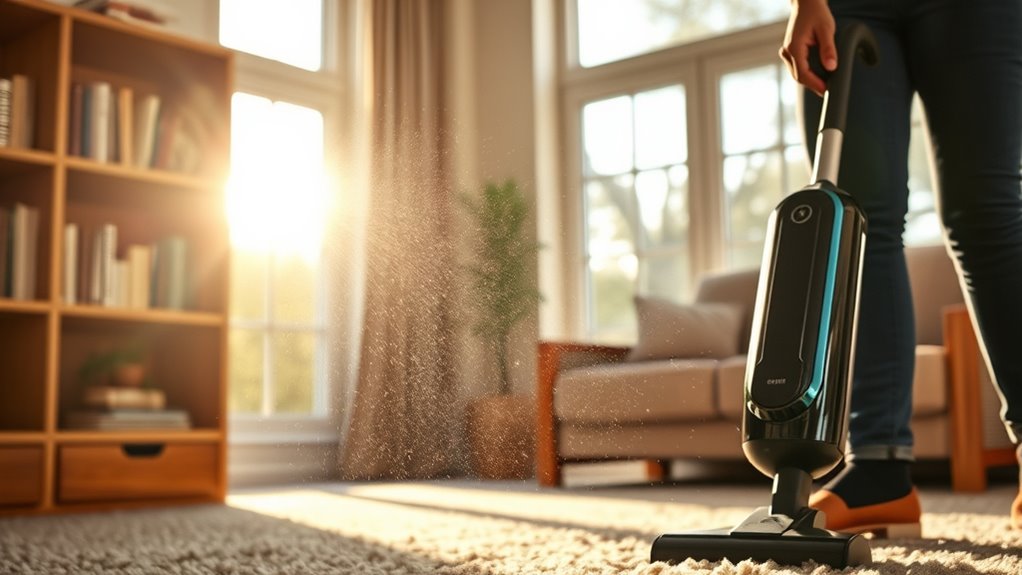
After you finish dusting, wait at least 15 minutes before vacuuming to let airborne dust settle. This pause in your cleaning sequence is essential because dusting kicks up fine particles that linger in the air.
Vacuuming last guarantees you capture this settled airborne dust, preventing it from resettling on surfaces. When vacuuming, use a HEPA filter vacuum to maximize dust removal, as it efficiently traps tiny dust particles.
Set your vacuum mode to one suitable for your floor type to avoid damage and enhance cleaning. Start vacuuming from the farthest corner of the room and work toward the exit to avoid recontamination of cleaned areas.
Following this cleaning order—dust first, then vacuum—optimizes your efforts. Don’t forget to clean or replace your vacuum’s filters regularly to maintain peak performance.
This method guarantees your home stays truly clean, with dust removed effectively and minimal recontamination after dusting.
Frequently Asked Questions
What Is the Correct Order for Cleaning?
You should dust first to lift particles, then wait about 15 minutes for dust to settle before vacuuming. This order helps remove dust effectively, prevents redistribution, and keeps your space cleaner and healthier overall.
It might seem like a bit of extra time, but trust me, it makes a big difference. Taking the time to let the dust settle means your vacuum can pick up more, leaving your space fresher.
What Is the Golden Rule of Dusting?
You absolutely must dust from top to bottom—that’s the golden rule. If you don’t, you’ll create a dust storm, redepositing grime everywhere.
Start high, work down, and you’ll save time, effort, and headaches during cleaning. It really makes the whole process way easier!
What Is the 20 Minute Rule of Cleaning?
The 20 Minute Rule of Cleaning means you should tackle cleaning tasks in focused, 20-minute bursts. You’ll stay motivated, avoid burnout, and keep your home consistently tidy by breaking chores into manageable sessions.
It’s all about making cleaning feel less overwhelming. Just set a timer, work hard for those 20 minutes, then take a break or switch tasks. Easy, right?
What Is Grandmas’ Simple Trick to Eliminate Dust?
Grandma’s simple trick is using a slightly damp microfiber cloth to trap dust better than dry dusting.
You’ll want to start high, like ceiling fans, and wrap the cloth on a broom handle for hard-to-reach spots.
It’s an easy way to get rid of dust without it flying everywhere. Give it a try!
Conclusion
When you dust first, imagine sweeping away fine particles that settle like morning mist on surfaces. This clears the way for your vacuum to swoop in, capturing every speck that falls to the floor.
By dusting before vacuuming, you create a cleaner, fresher space where sunlight can dance on spotless shelves and floors. So grab your duster first, then follow with the vacuum—it’s the simple trick for a truly sparkling home.
In fact, dusting before vacuuming helps remove allergens and dust mites more effectively. It prevents dirt from settling back onto surfaces after you’ve cleaned. Plus, it makes your vacuuming more efficient because it only has to pick up what’s on the floor.
So, for the best results in your cleaning routine, dust first and vacuum second. This order not only leaves your home looking spotless but also promotes a healthier environment. Remember, a little change in your cleaning order can make a big difference in achieving a dust-free, fresh-smelling home.




4 Comments