
Can I Vacuum Glass Safely?
You can vacuum broken glass safely if you use the right vacuum designed for tough debris, like an industrial shop vacuum with a bypass motor and wide hose. These vacuums are built to handle sharp, heavy materials without getting damaged.
Avoid using regular household vacuums or wet/dry vacuums because glass shards can seriously harm their components.
Always wear protective gloves and goggles when cleaning up glass. Start with low suction to avoid spreading tiny shards around. Good lighting helps you spot even the smallest pieces.
When you’re done, empty the dustbin carefully outside to prevent any accidents inside your home.
Keep going to discover how to protect your vacuum and clean up broken glass efficiently and safely.
Key Takeaways
- Use industrial shop vacuums with bypass motors and wide hoses designed specifically for broken glass to prevent internal damage. These vacuums are built tough for this kind of cleanup.
- Avoid household, cordless stick, wet/dry, and robot vacuums. They can get damaged or even cause safety hazards because of jagged glass shards.
- Always wear safety goggles and gloves when cleaning up glass. It’s also smart to use LED lighting to spot those tiny, almost invisible glass pieces.
- Start vacuuming with low suction using a handheld vacuum. Once you’ve picked up the bigger glass chunks, you can slowly increase the suction power.
- After vacuuming, immediately empty the dustbin outside into a sturdy container. This helps keep any leftover glass shards from ending up back inside your home.
Which Vacuums Are Safe for Vacuuming Broken Glass
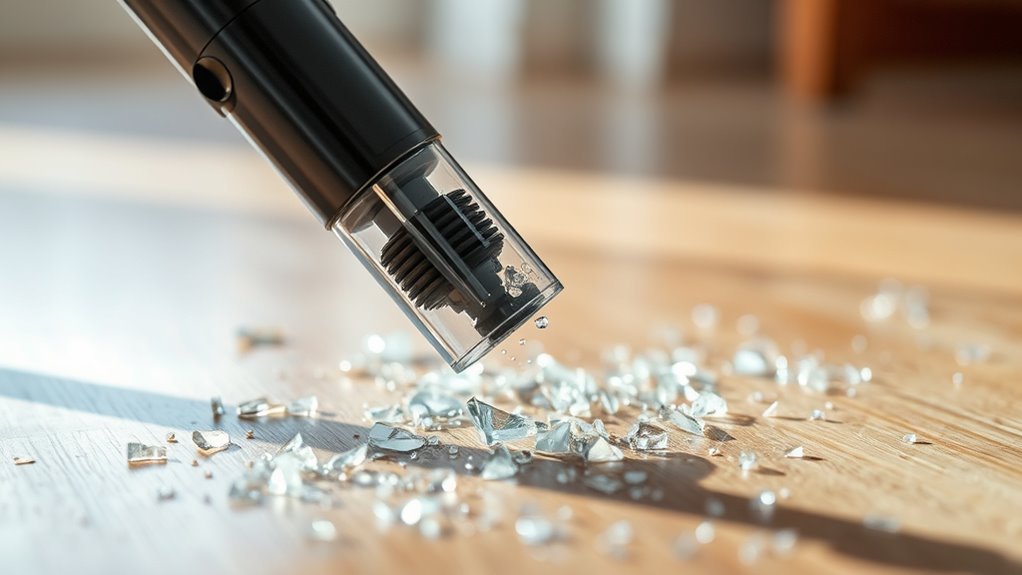
Although many vacuums seem convenient, not all are safe for cleaning up broken glass. When dealing with sharp glass shards, your priority should be safety and avoiding vacuum damage.
Industrial shop vacuums are your best bet—they come with strong suction, wide hoses, and bypass motors designed to handle debris like broken glass safely. These features prevent internal damage and keep the vacuum running smoothly.
Industrial shop vacuums offer strong suction and durable design to safely handle broken glass without damage.
On the other hand, wet/dry vacuums are not recommended because their internal water pumps and narrow pipes can easily get clogged or damaged by glass shards.
Regular household vacuums and cordless stick vacuums pose risks; jagged glass can ruin components, leading to costly repairs. Robot vacuums are especially unsafe, as shards can embed in the wheels and scratch your floors.
Always wear safety goggles when vacuuming broken glass to protect your eyes from flying debris. Choosing the right vacuum guarantees you clean effectively without risking safety or equipment damage.
How to Vacuum Broken Glass Without Damaging Your Vacuum
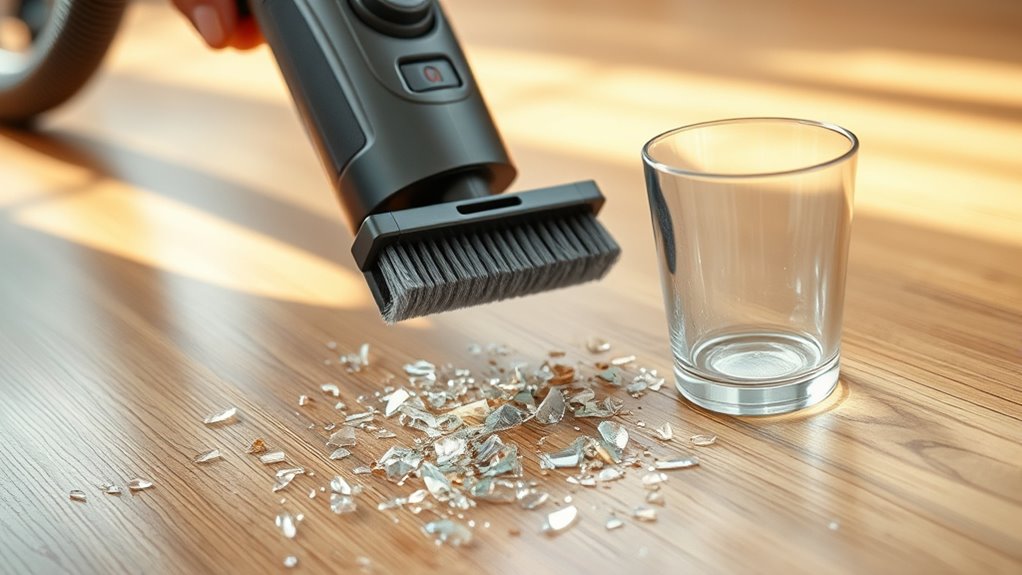
Choosing the right vacuum is only part of the process; knowing how to use it without causing damage is just as important. To vacuum glass safely, start with a handheld vacuum, preferably bagless and without a flexible hose, since broken glass shards can easily damage hoses.
Use low suction at first, increasing gradually as you check for remaining glass fragments. Always wear protective gloves and eyewear to protect yourself from sharp glass shards during cleanup.
Employ an LED light to spot tiny shards invisible in normal lighting. After vacuuming, empty the dustbin immediately outside into a sturdy container to prevent glass shards from re-entering your home.
These vacuuming tips help avoid vacuum damage while efficiently cleaning up broken glass. Following these steps ensures your vacuum stays intact and your space remains safe when you vacuum glass, making vacuum safety a priority during cleanup.
Frequently Asked Questions
Is It Okay to Vacuum Little Pieces of Glass?
Yes, you can vacuum little pieces of glass if your vacuum is designed for debris and has a strong filter. Just sweep larger shards first, vacuum slowly, and avoid carpets to protect your vacuum and safety.
It’s a good idea to be careful though. Taking your time helps prevent damage to your vacuum and keeps things safe around you.
Is It Better to Vacuum or Sweep Glass?
It’s better to sweep glass first, especially large or sharp pieces. This helps avoid damaging your vacuum.
Then, you can carefully vacuum the small shards left behind. This way, you’ll get a thorough and safe cleanup without risking your equipment.
What Type of Vacuum Is Best for Glass?
You’ll want to use an industrial shop vacuum for glass since it’s built to handle sharp shards safely.
Avoid cordless sticks, robot vacuums, and regular household vacuums—they can get damaged or spread debris dangerously. It’s just not worth the risk!
Can You Put Glass in a Vacuum?
You wouldn’t toss a lion into a birdcage, so don’t put glass in your vacuum. It’ll harm your machine and risk safety.
Instead, carefully gather glass by hand and dispose of it in a sturdy container.
Conclusion
You can vacuum broken glass safely if you choose the right vacuum, use the proper attachments, and take careful precautions. Don’t rush, don’t ignore small shards, and don’t skip the final sweep with a broom or tape.
By being cautious, by using the right tools, and by cleaning thoroughly, you protect your vacuum and your home from damage. It’s important to stay safe and stay smart when handling broken glass.
Vacuuming glass safely means paying attention to every detail. Small shards can be tricky, so always follow up with a broom or even tape to catch what the vacuum might miss. This way, you keep your space clean and your vacuum intact.
Remember, when dealing with broken glass, careful cleanup is key to avoiding injury and damage. So handle broken glass with care every time, and use the right vacuum tools to vacuum glass safely and effectively.


3 Comments