
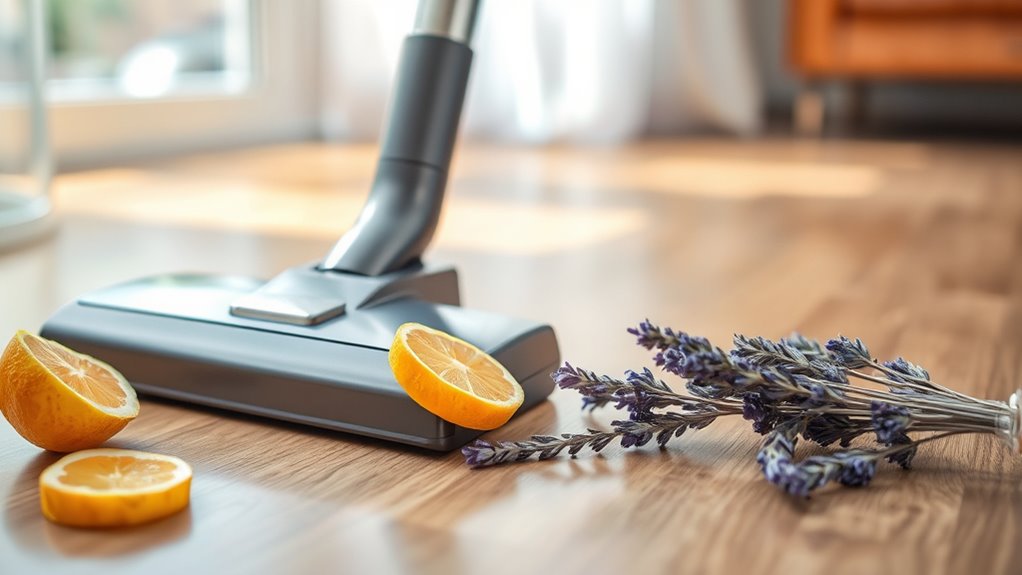
5 Easy Tips to Make Your Vacuum Smell Better
To keep your vacuum smelling fresh and clean, it’s important to empty it right after each use. This helps avoid buildup and those annoying dust clouds.
Also, check for any blockages in the hoses or brush rollers since trapped debris can cause bad odors.
Make sure to clean or replace the filters regularly. Washing vacuum parts like hoses and canisters with mild soap can make a big difference too.
Here’s a neat trick: sprinkle some baking soda inside the canister before vacuuming to neutralize odors naturally.
Lastly, store your vacuum in a dry, well-ventilated spot to prevent any musty smells from developing.
Following these simple tips will keep your vacuum efficient and odor-free. Trust me, taking these small steps makes maintaining your vacuum way easier—and your home smells better too!
Key Takeaways
– Regularly clean or replace vacuum filters to prevent odor-causing buildup.
It really helps keep things fresh.
– Empty the vacuum canister or bag immediately after each use to avoid stale smells.
Don’t let that stuff sit around too long!
– Clear hair and debris from brush rollers and hoses to eliminate trapped odors.
This little step makes a big difference.
– Sprinkle baking soda inside the canister or bag before vacuuming to neutralize odors.
It’s a simple hack that works wonders.
– Store the vacuum in a dry, well-ventilated area to prevent mold and mildew growth.
Keeping it dry is key!
Why Does Your Vacuum Smell and How to Fix It

If your vacuum smells unpleasant, it’s often because blocked filters or accumulated debris have created a breeding ground for bacteria and mold. These filters trap dust and pet hair, but when clogged, they can’t do their job properly, leading to that stubborn vacuum smell.
Pet hair and food crumbs inside the vacuum also rot over time, producing strong odors. Moisture from vacuuming damp areas can encourage mold growth, adding a musty scent.
Pet hair and food crumbs can rot inside your vacuum, while moisture encourages mold and musty odors.
To fix this, start with regular maintenance: clean or replace your vacuum’s filters to prevent buildup. Remove pet hair stuck in brush rollers and wipe down the interior to stop mold from developing.
For effective odor removal, consider using a vacuum deodorizer or sprinkling baking soda in the canister before vacuuming. Keeping up with these simple steps ensures your vacuum stays fresh and efficient, saving you from unpleasant smells every time you clean.
Empty Your Vacuum Regularly to Prevent Odors
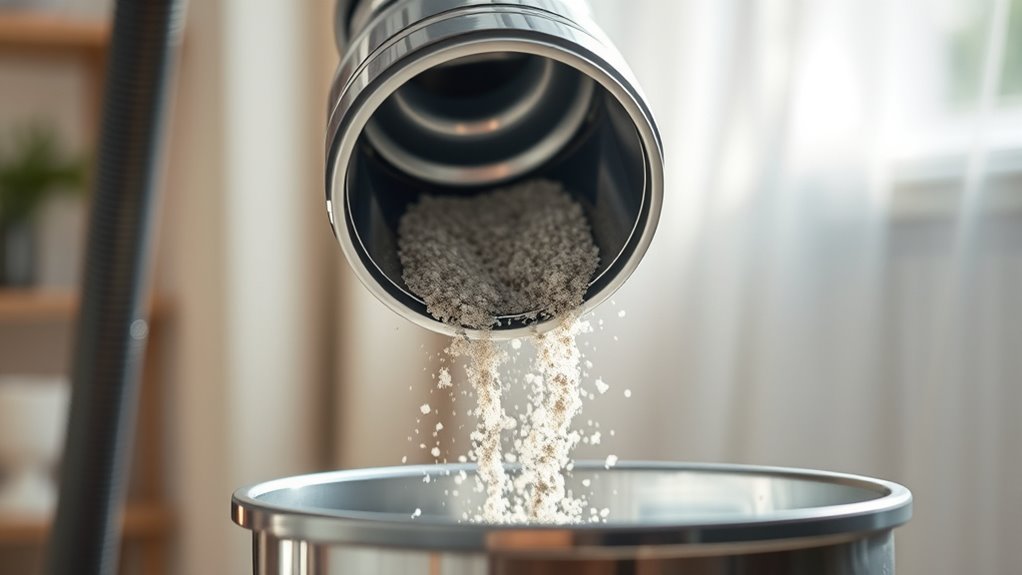
Because trapped dust and debris quickly cause unpleasant smells, you should empty your vacuum canister or bag immediately after each use.
For bagless vacuums, avoid letting the canister fill beyond the maximum fill line. Overfilling can create stale odors and reduce suction power.
If you use a vacuum with a bag, regularly check and replace it once it’s full. This helps prevent musty smells caused by accumulated dust and pet hair.
Make it a habit to empty your vacuum outside. This keeps dust clouds and odors from spreading indoors.
Keeping your vacuum clean and empty regularly also helps prevent mold and bacterial buildup. These are common culprits behind bad vacuum odors.
By staying on top of emptying and cleaning your vacuum, you’ll maintain fresher air in your home and extend the life of your machine.
Don’t let a dirty canister or bag ruin your vacuum’s performance or your indoor air quality.
Clear Blockages That Cause Bad Vacuum Smells

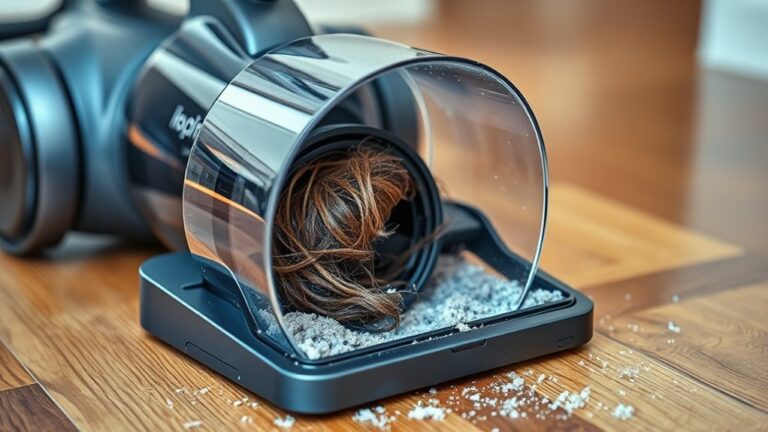
When blockages build up in your vacuum’s brush bar, hose, or canister, they trap dirt and debris that quickly produce unpleasant odors. To stop this, regularly check for obstructions like hair and debris wrapped around the brush bar and remove them.
Hold your vacuum’s hose up to the light to spot any blockages inside that could cause musty smells. Don’t forget to disassemble removable parts such as the hose and canister for thorough cleaning.
Residue buildup in these areas often leads to foul odors, so wash them with warm, soapy water to clear away grime and mold. By staying on top of these cleaning tasks and clearing blockages promptly, you’ll prevent trapped dirt from turning into stubborn smells.
Keeping your vacuum free from obstructions not only improves its smell but also boosts its performance, making your cleaning routine more effective and pleasant. It’s a simple step that really makes a difference!
Clean Vacuum Parts and Filters to Remove Odors
Keeping your vacuum free of blockages sets the stage for a fresher-smelling machine, but cleaning the parts and filters takes odor control a step further.
Remove attachments like crevice tools and hoses regularly and wash them in warm, soapy water to get rid of odor-causing debris. Don’t forget to clean the inside of the canister, especially if you have a bagless vacuum, to prevent musty smells.
Check your filters often—dirty filters trap bacteria and cause bad odors. If they’re washable, rinse them thoroughly and let them dry before reinstalling.
| Part | Cleaning Method | Frequency |
|---|---|---|
| Attachments | Wash with soapy water | Weekly |
| Canister Inside | Wipe with vinegar-water | Monthly |
| Filters | Rinse or replace | Every 1-3 months |
| Hoses & Brush | Clear debris manually | Monthly |
Keeping these parts clean guarantees your vacuum smells fresh and works efficiently.
Use Baking Soda and Store Your Vacuum to Keep It Fresh
Although vacuuming removes dirt and dust, odors can still linger inside your machine. To keep your vacuum fresh, sprinkle a small amount of baking soda inside the canister or vacuum bag. Baking soda neutralizes odor and absorbs moisture, preventing musty smells.
Sprinkle baking soda in your vacuum to neutralize odors and keep it smelling fresh.
After each use, empty the canister promptly to reduce debris buildup that causes bad odors. It really helps keep things smelling clean.
Where you store your vacuum matters too. Keep it in a well-ventilated, dry space to prevent humidity and mold growth.
Avoid storing your vacuum in direct sunlight or damp areas, as these conditions encourage odor buildup and damage. Proper airflow in the storage area helps maintain freshness by minimizing lingering smells.
Frequently Asked Questions
How Do I Make My Vacuum Smell Nice When Vacuuming?
You can make your vacuum smell nice by sprinkling baking soda inside before vacuuming. Regularly cleaning or replacing filters also helps keep things fresh.
Emptying the canister often is a good idea, and wiping parts with a vinegar solution can make a difference too. Oh, and adding scented beads helps as well.
How to Get Stinky Smell Out of a Vacuum?
Think of your vacuum like a forgotten gym sock—it needs regular cleaning. Empty the canister, wash filters, and clear debris to erase stinky smells.
Sprinkle baking soda inside to freshen, and you’ll breathe easy again. It’s a simple trick but super effective!
Is There Something I Can Put in My Vacuum to Make It Smell Better?
Yes, you can put scented beads, a cotton ball with fragrance, or baking soda inside your vacuum. These options freshen the air, neutralize odors, and keep your vacuum smelling clean while you use it.
It’s pretty simple to do, and it makes a noticeable difference. Just toss one of these into the vacuum bag or canister, and you’re good to go!
Can You Put Scent Boosters in a Vacuum?
Yes, you can put scent boosters in your vacuum. For example, Sarah placed scented beads in a small fabric bag inside her bagless vacuum’s filter area.
This instantly freshened her home with every clean without harming the motor or filters. It’s a simple trick that makes your space smell great while you vacuum!
Conclusion
So, if you want your vacuum to smell less like a science experiment gone wrong, just follow these simple tips. Empty it before it becomes a biohazard, clear those blockages like a vacuum ninja, and clean those filters like your life depends on it.
Sprinkle some baking soda like fairy dust, and store it like a precious artifact. Your nose (and guests) will thank you—because no one wants their vacuum smelling like a forgotten gym sock!
By regularly emptying your vacuum, tackling blockages, and keeping filters spotless, you’re preventing bad odors from developing. Adding baking soda helps neutralize any lingering smells, while proper storage keeps your vacuum fresh between uses. These easy tips can make a huge difference in how your vacuum smells, making cleaning a more pleasant experience for you and everyone around. So go ahead, try these simple steps and enjoy a vacuum that smells fresh and welcoming every time you use it!



One Comment