
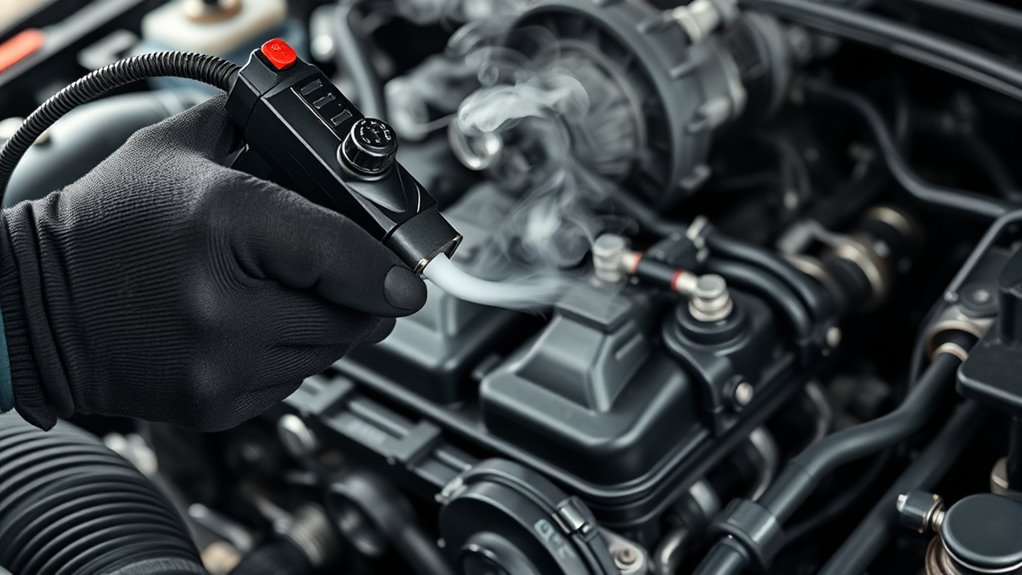
How to Check Vacuum Leaks in 5 Easy Steps
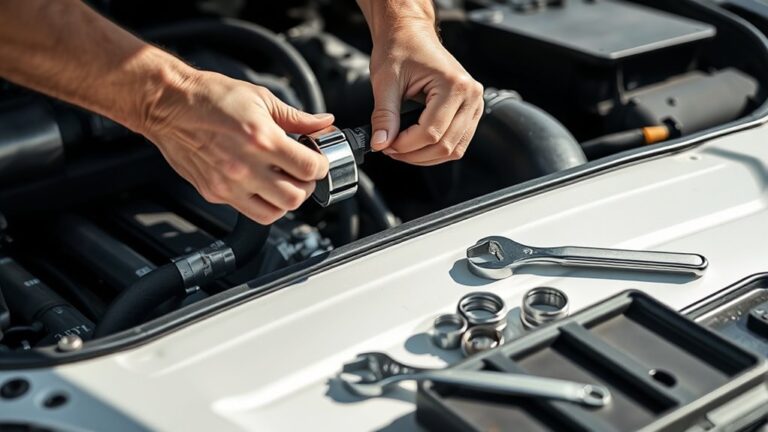
Start by visually inspecting all vacuum hoses and connections for cracks, looseness, or damage. Checking vacuum leaks starts here because even small cracks can cause big problems in engine performance. Take your time to look closely around each connection point.
Next, listen closely for hissing sounds near hose junctions while the engine runs. That faint hiss is often a clear sign of escaping air, which means a leak. It’s like your engine is trying to tell you something!
Then, spray soapy water on suspect areas to spot bubbling that shows escaping air. The bubbles make it easy to pinpoint exactly where the leak is hiding. This trick really helps when you can’t see the damage with your eyes alone.
Gently pinch flexible hoses to see if engine idle smooths out, indicating leaks. If the engine calms down when you do this, you’ve probably found a trouble spot. It’s a simple test but super effective.
Finally, confirm leaks with a vacuum gauge and plan repairs accordingly. Using the gauge will give you a clear reading of the leak’s severity. Keep going, and you’ll uncover even more tips to pinpoint and fix vacuum leaks effectively.
Key Takeaways
- Visually inspect all vacuum hoses and connections for cracks, splits, or loose fittings. Use a flashlight and mirror to help you see better.
- Listen carefully for high-pitched hissing sounds near hose connections and the intake manifold while the engine is running.
- Spray soapy water on hoses and joints. Look for bubbles that show escaping air during engine idle.
- Gently pinch flexible vacuum hoses one at a time. Watch for any changes in engine idle or RPM.
- Use a vacuum gauge and repeat the soapy water or carb cleaner tests to confirm leaks before you start repairing.
Inspect Vacuum Lines for Leaks
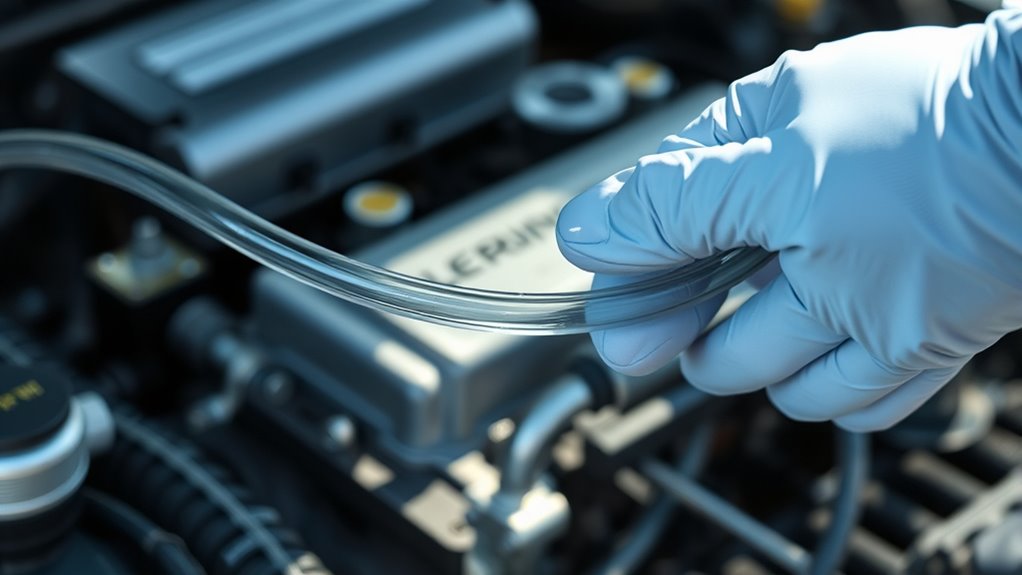
Where should you begin when checking for vacuum leaks? Start with a thorough visual inspection of all vacuum hoses and lines. Look closely for cracks, splits, or disconnections, especially around connection points and fittings where leaks often occur.
Use a flashlight and mirror to reach hard-to-see areas, like underneath the intake manifold and behind engine parts. Pay attention to hoses that look soft, brittle, or swollen—these signs indicate deterioration that can cause vacuum leaks.
Use a flashlight and mirror to inspect hard-to-see areas for soft, brittle, or swollen hoses indicating vacuum leaks.
Don’t forget to verify hose clamps and fittings to ensure they’re tight and secure. This helps prevent unmetered air from entering your system.
Focus on critical components like the brake booster hose, EGR valve lines, and intake manifold gaskets. These spots are common sources of leaks, so giving them extra attention really pays off.
Listen for Vacuum Leak Hissing Sounds
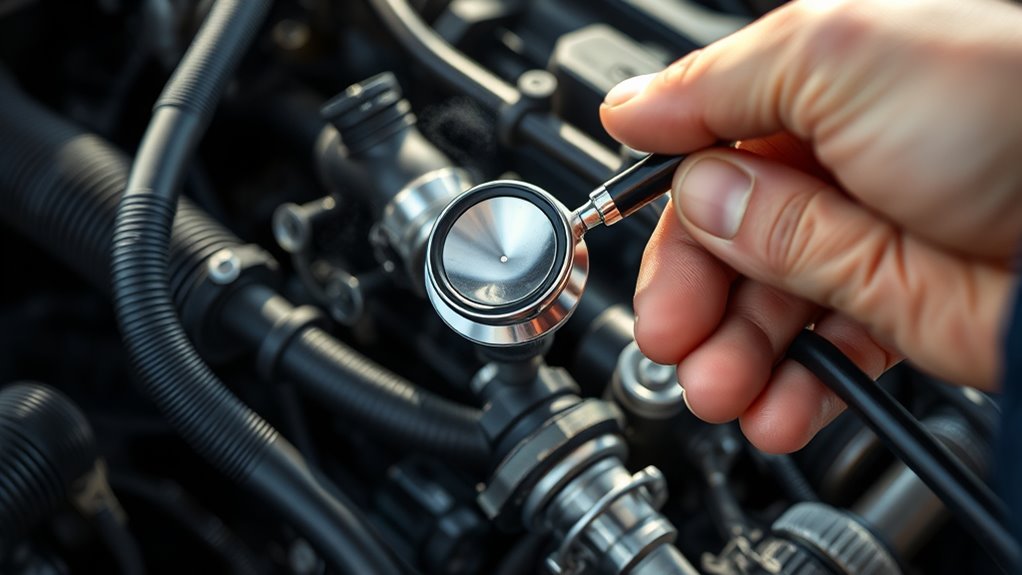
Although visual inspections can reveal many issues, you’ll often need to listen carefully for high-pitched hissing sounds to pinpoint vacuum leaks. These hissing sounds happen when unmetered air escapes during engine operation, especially near hose connections or the intake manifold.
To listen for a vacuum leak, find a quiet environment and get close to the suspected areas. Using a mechanic’s stethoscope or a rubber hose against your ear can amplify the sound, making it easier to identify the leak’s exact location.
Remember, the hissing sounds often become clearer under engine load or at certain RPMs due to pressure changes. Once you isolate the noise, focus your visual inspection on nearby hoses, connections, and gaskets—these are common sources of leaks.
| Location | Detection Method | When to Listen |
|---|---|---|
| Hose Connections | Stethoscope or hose | Idle and under load |
| Intake Manifold | Close ear proximity | RPM changes |
| Vacuum Reservoir | Visual + listening | Engine warm |
| Gasket Seals | Amplified listening | Sudden RPM drops |
| Brake Booster Hose | Targeted stethoscope use | Engine off to on shift |
Use Soapy Water Spray to Detect Vacuum Leaks
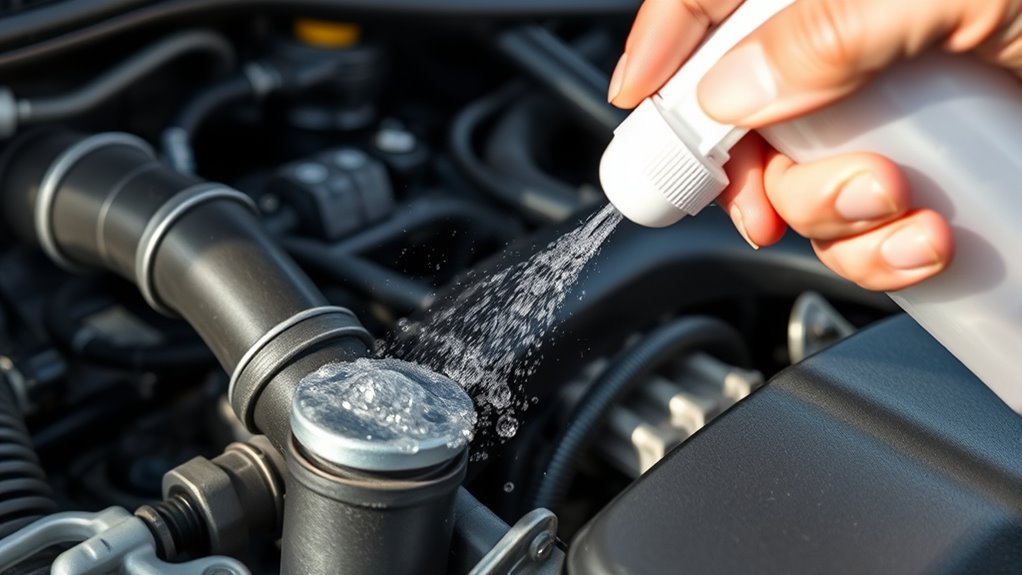
When you suspect a vacuum leak, spraying a soapy water mixture onto hoses and connection points while the engine idles can help you spot escaping air. Use a spray bottle with a fine mist setting to evenly apply the soapy water on vacuum hoses, intake manifold joints, and other connection points.
As the engine runs at normal operating temperature, watch closely for bubbling or foaming—these indicate air escaping and confirm vacuum leaks. The spray method is straightforward and effective, allowing you to identify leaks without special tools.
After spotting bubbles, turn off the engine and carefully inspect those areas. Damaged hoses or faulty components should be repaired or replaced promptly to restore proper engine performance.
Using soapy water is a reliable, cost-effective way to pinpoint vacuum leaks and prevent further issues. This simple technique makes diagnosing leaks accessible, even if you’re new to automotive maintenance.
Pinch Vacuum Hoses to Find the Leak
If you suspect a vacuum leak but haven’t pinpointed it yet, pinching vacuum hoses while the engine idles can quickly reveal the source. During vacuum leak detection, gently pinch vacuum hoses made of flexible rubber one at a time with your fingers as the engine runs at idle.
If you notice the engine idle smooths out or the RPM changes when you pinch a hose, that hose likely has a leak or damage. Be careful not to squeeze the hose too tightly, as excessive pressure can cause damage or restrict airflow too much during testing.
Perform this check in a safe, well-ventilated area to avoid inhaling fumes. This hands-on method is effective because it temporarily blocks leaking hoses, helping you isolate the vacuum leak without special tools.
Using this simple technique speeds up vacuum leak detection and gets you closer to fixing the issue before moving on to more detailed inspections.
Confirm Leak Locations and Plan Repairs
Before you start repairs, verify the exact locations of vacuum leaks by carefully inspecting hoses, gaskets, and connection points for visible damage or disconnections. Use a thorough visual inspection to spot cracks or loose fittings in the vacuum system.
Begin repairs by thoroughly inspecting hoses and connections for visible damage or disconnections to identify vacuum leaks.
To pinpoint leaks, apply carb cleaner or soapy water to suspect areas and watch for changes in engine RPM or bubbles forming. You can also use a vacuum gauge to measure engine vacuum pressure and compare it to manufacturer specs, helping you identify weak spots in the system.
If you find a suspect hose, pinch or block it while the engine runs; any improvement in idle suggests a leak. Once you repair a leak, recheck the area with a soap solution to ensure it’s fully sealed.
Confirming leak locations with these steps helps you plan effective repahttps://www.thevacuumadvisor.com/how-to-vacuum-ac-system/irs and restore your vacuum system’s proper function. It’s a simple process that really pays off in the long run.
Frequently Asked Questions
What’s the Easiest Way to Check for Vacuum Leaks?
The easiest way to check for vacuum leaks is by spraying carb cleaner or soapy water around hoses while the engine idles.
If the RPMs change, you’ve likely found a leak. It’s quick and effective.
Give it a try—it usually takes just a few minutes and can save you a lot of troubleshooting time.
Can You Use WD-40 to Check for Vacuum Leaks?
You shouldn’t use WD-40 to check for vacuum leaks because it’s flammable, doesn’t vaporize well, and can give false results.
Instead, use carb cleaner or soapy water for safer, more accurate leak detection. It’s just a better choice overall.
Where Is the Most Common Place for a Vacuum Leak?
Think of your engine like a leaky balloon—the most common spot for a vacuum leak is around the intake manifold gasket. It’s prone to cracking or becoming brittle, so you’ll want to inspect that area first.
These gaskets take a lot of heat and pressure, which makes them wear out over time. If you notice any rough idling or engine performance issues, that’s a good place to start looking.
What Can I Spray to Find a Vacuum Leak?
You can spray carburetor cleaner, starting fluid, brake cleaner, or soapy water around suspect vacuum hose connections. Watch for engine RPM changes or bubbles—they’ll help you spot leaks quickly.
Just be careful with flammable sprays. Safety first!
Conclusion
Now that you’ve hunted down those sneaky vacuum leaks, your engine will hum like a well-tuned orchestra. By inspecting lines, listening closely, spraying soapy water, and pinching hoses, you’ve become a detective in your own right.
Remember, catching leaks early keeps your car running smooth and saves you from future headaches. So, tighten those repairs and enjoy the ride—your engine’s airflow of renewal is just a few steps away!
Checking vacuum leaks is a simple but crucial part of vehicle maintenance. It helps ensure optimal engine performance and fuel efficiency. Plus, spotting and fixing leaks early prevents costly repairs down the road.
So keep these easy steps in mind whenever your car feels a bit off. With a little attention, your engine will stay healthy, smooth, and ready for the road ahead!




4 Comments